Liquidity, Depth, Slippage

  • Difficulty Level: Advanced
  • Learning Duration: 45-55 minutes
Liquidity, Depth, Slippage

Start With the Reality Check

Most strategies look profitable on charts. Many fail at execution. Liquidity, depth, and slippage determine whether a strategy’s theoretical edge survives contact with the market.

Liquidity: The Ability to Transact Without Distortion

Liquidity is how easily you can buy or sell an asset without moving its price significantly.

Highly Liquid Markets

  • Absorb large orders
  • Maintain tight spreads
  • Reduce execution risk

Illiquid Markets

  • Move sharply on modest orders
  • Produce unstable fills
  • Increase hidden costs

Liquidity Is Not Constant

  • Time of day
  • Market regime
  • Asset popularity
  • Volatility conditions

Depth: Where Liquidity Actually Lives

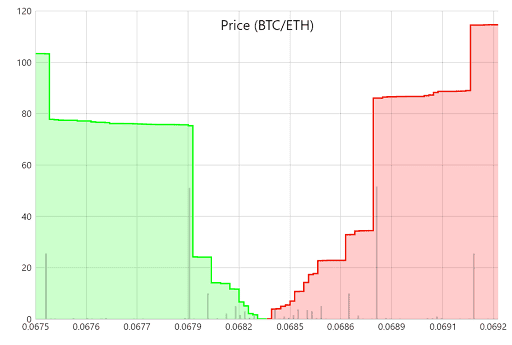
Market depth shows how much liquidity exists at different price levels, not just at the best bid and ask

  • Shallow depth → price moves easily
  • Deep depth → price resists movement
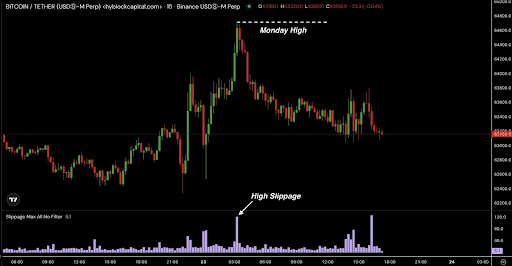
  • Depth can vanish quickly during volatility

Depth explains why price sometimes jumps even when volume looks average.

Slippage: The Cost You Don’t See on Charts

Slippage is the difference between:

  • The price you expect
  • The price you actually get

It occurs when:

  • Orders are too large for available depth
  • Markets move quickly
  • Liquidity pulls away during volatility

How Slippage Actually Happens (Sequence View)

  • Order hits the market
  • Best price level fills partially
  • Remaining size fills at worse prices
  • Average execution price degrades

This effect compounds with:

  • Larger size
  • Lower liquidity
  • Faster markets

Why Slippage Increases During Volatility

During volatility:

  • Liquidity providers pull orders
  • Spreads widen
  • Depth thins
  • Execution risk spikes

Ironically, this happens when traders want to trade the most.

Spread vs Slippage (Quick Distinction)

Cost Type What It Is When It Hurts Most
Spread Bid–ask gap Low-liquidity markets
Slippage Execution degradation High volatility / large size

Both are execution costs. Only slippage scales aggressively with size.

Strategy Performance vs Execution Performance

A critical advanced concept:

  • A strategy can be profitable on paper and untradable in reality
  • Ignoring market depth
  • Assuming perfect fills
  • Underestimating slippage
  • Trading size inappropriate for the market

Execution quality is part of the strategy.

Liquidity Clusters and Price Attraction

Price often moves toward areas with:

  • High resting liquidity
  • Unfilled orders
  • Stop clusters

This is not manipulation. It is how markets discover price efficiently. Liquidity attracts price; price consumes liquidity.

Slippage Scales Non-Linearly

Slippage does not increase in a straight line. Doubling size may:

  • More than double slippage
  • Change the entire execution profile
  • Turn winners into losers

Scaling capital requires structural changes, not just larger trades.

Managing Liquidity Risk (Advanced Practices)

  • Reducing size in thin market conditions
  • Avoiding market orders during volatility spikes
  • Trading during high-liquidity sessions
  • Splitting orders to reduce impact
  • Accepting missed trades over poor fills

Good traders skip trades when execution quality degrades.

Why Retail and Institutions Experience Different Markets

Institutions:

  • Move the market
  • Must manage impact
  • Optimize execution over time

Retail traders:

  • Are price takers
  • Face less impact
  • Still suffer slippage in fast markets

Understanding where you sit matters.

Liquidity Is a Regime Variable

Liquidity behaves differently in:

  • Trending vs ranging markets
  • Risk-on vs risk-off environments
  • Calm vs stressed conditions

Advanced traders adjust expectations, not just tactics.

Final Perspective

Liquidity, depth, and slippage explain:

  • Why entries feel “late”
  • Why exits feel “worse than expected”
  • Why scaling is difficult
  • Why many strategies fail silently

This is not a technical detail. This is market reality.