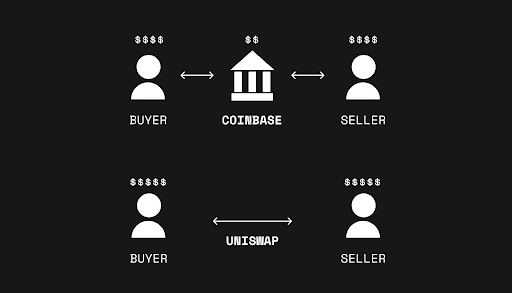
DeFi is a collection of financial applications built on public blockchains like Ethereum, BNB Chain, and Solana. These applications use smart contracts to provide services such as trading, lending, borrowing, and yield generation.
In DeFi, users do not create accounts or deposit funds with intermediaries. Instead, they connect a wallet and interact directly with protocols that execute transactions automatically.
Web3 refers to the next phase of the internet where applications are decentralized and user-owned. In Web3:
Web3 enables financial and non-financial applications to operate without centralized control.
DeFi applications are a core part of the Web3 ecosystem. Wallets act as the access layer, smart contracts handle logic, and blockchains provide settlement and transparency.
For example, a user can:
All without relying on a central institution.
Traditional finance relies on intermediaries, geographic restrictions, and limited access. DeFi was created to:
These benefits come with responsibility, as users are in control of their own security.
DeFi involves risks that users must understand:
Education and caution are essential.
This knowledge is useful for:
DeFi and Web3 are foundational concepts in modern crypto markets. Understanding them is essential before engaging in on-chain trading or yield strategies.
This content is for educational purposes only. On-chain trading and DeFi protocols involve financial risk.