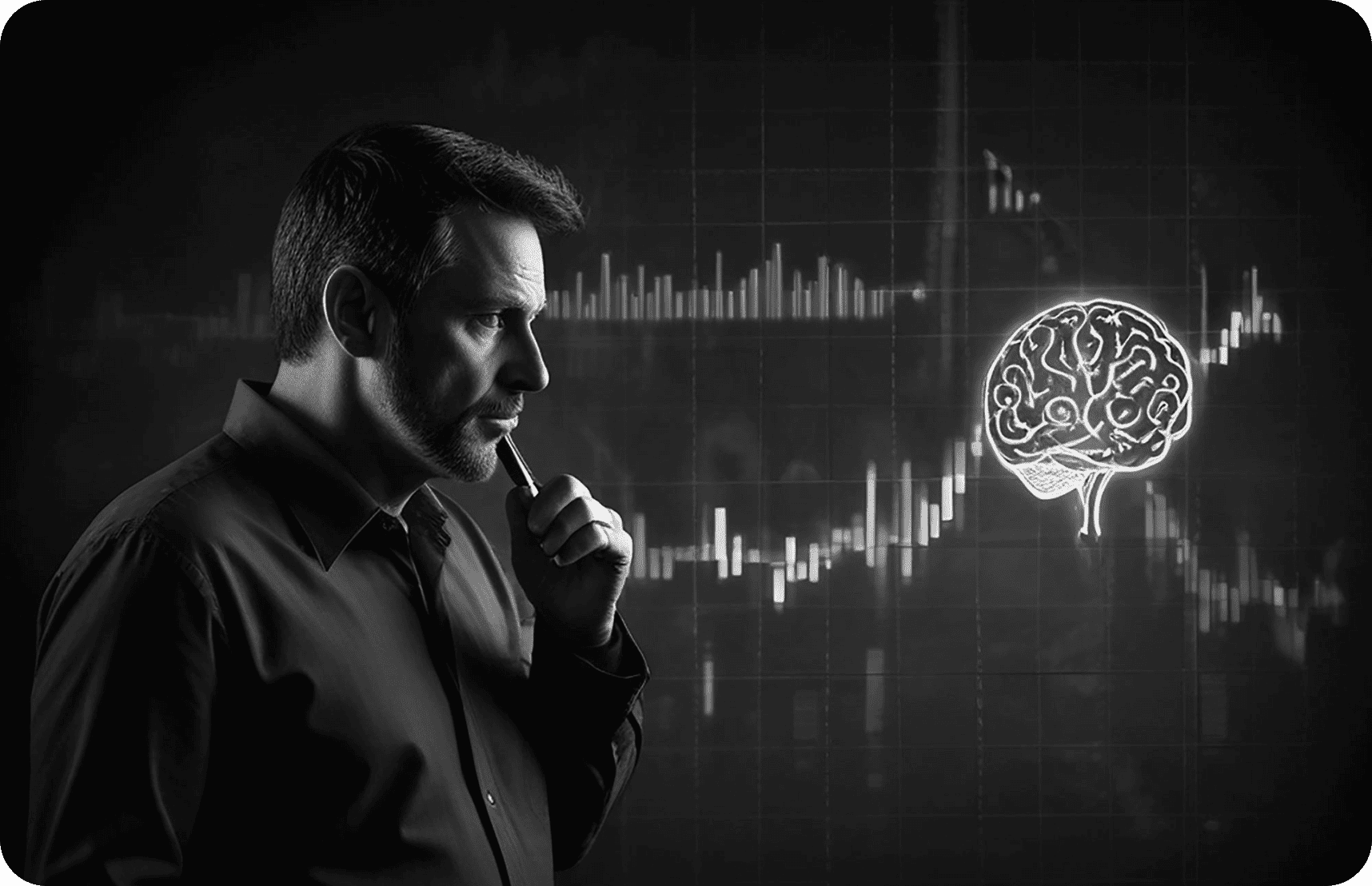
Market psychology refers to the collective emotions, behaviors, and decision-making patterns of market participants.
Prices move not only because of data or fundamentals, but because of how people react to information, risk, and uncertainty.
In crypto markets, psychology plays an even larger role due to:
Understanding market psychology helps traders explain why price behaves the way it does, not just how it moves.
Two traders can see the same chart and make opposite decisions.
The difference is not knowledge - it is psychological response.
Market psychology influences:
Most trading mistakes come from emotional reactions, not technical errors.
At the center of market psychology are two dominant emotions:
Fear appears when:
Fear-driven behavior includes:
Greed appears when:
Greed-driven behavior includes:
Markets often move between fear and greed, creating cycles.
Occurs when traders enter late because the price is already moving.
Typical result:
Losses feel more painful than gains feel satisfying.
This causes traders to:
After a series of wins, traders may:
This often leads to sharp losses.
Traders seek information that supports their existing view and ignore opposing signals.
This reduces objectivity and increases emotional attachment to trades.
Markets move in phases driven by crowd psychology:
Large market tops often form during extreme optimism.
Major bottoms often form during widespread fear.
Understanding crowd behavior helps traders avoid emotional extremes, not predict exact turning points.
Most traders:
As a result:
Markets reward patience and discipline, not emotional reactions.
Good traders focus on process, not outcomes.
Key practices include:
When risk is controlled, emotional pressure decreases.
Risk management is the strongest psychological tool.
When traders:
They are less likely to panic, revenge trade, or break rules.
Psychology improves when losses are survivable.
Successful trading requires:
No single trade matters.
Performance is measured over hundreds of trades, not a few outcomes.
Trading is a probability-based activity, not a test of intelligence or prediction skill.
Market psychology explains why markets behave irrationally - and why disciplined traders gain an edge over time.